

Great White Sharks: A Comeback Story?
For decades, the Great White Shark was a figure of fear, relentlessly hunted and misunderstood. Overfishing, driven by the demand for their fins and teeth, coupled with targeted persecution due to sensationalized attacks, decimated populations throughout the 20th century. By the 1990s, these apex predators were facing a real risk of extinction in many parts of the world.
Thankfully, a shift in attitudes and increased conservation efforts began to take hold. Great White Sharks gained protected status in several countries, including the United States, South Africa, and Australia. Early signs of recovery were observed in some areas, offering a glimmer of hope for the species. But these initial observations were often localized and lacked comprehensive, long-term data.
Now, the latest research presented during Shark Week 2026 provides a more nuanced and encouraging picture. While challenges remain, the data suggests a genuine, albeit fragile, recovery is underway in certain key regions. It's not a simple success story, and requires continued vigilance, but the trend is undeniably positive. It’s a testament to what can happen when we prioritize conservation.
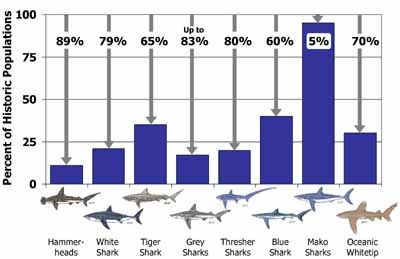
2026 Research: Key Findings on Population Trends
The Shark Week 2026 research, conducted by a collaborative team of scientists from NOAA Fisheries and various international institutions, provides the most comprehensive assessment of Great White Shark populations to date. The study utilized a combination of satellite tagging, photo-identification, and genetic analysis to estimate population sizes in key regions.
The data indicates that the Northwest Atlantic population, encompassing areas off the coast of the United States and Canada, has seen an estimated 4.5% annual growth rate since 2010, bringing the current population to approximately 750-1000 individuals. This is a significant increase from the estimated 300-500 individuals in the 1990s. Population estimates for South Africa, however, paint a less optimistic picture, with the population remaining stable at around 300-500 individuals.
Australian populations are proving difficult to assess with the same level of precision due to the vastness of the region and logistical challenges. Current estimates suggest a population of 500-800 individuals, but researchers acknowledge a considerable margin of error. Importantly, the research confirms a trend towards increasing juvenile survival rates in the Northwest Atlantic, a crucial indicator of long-term population health.
Northwest Atlantic Recovery: A Detailed Look
The recovery of the Northwest Atlantic Great White Shark population is often cited as a conservation success story. Several factors have contributed to this positive trend, most notably the implementation of stricter fishing regulations. The banning of targeted shark fishing and the reduction of bycatch in commercial fisheries have significantly decreased mortality rates.
The establishment of marine protected areas, such as the Stellwagen Bank National Marine Sanctuary, has also played a role, providing crucial foraging habitat and refuge for sharks. Changes in prey availability, specifically an increase in seal populations due to their own conservation measures, have further supported the recovery. Seals are a primary food source for Great Whites in this region.
However, challenges remain. Entanglement in fishing gear continues to be a threat, and the potential impacts of climate change on prey distribution are still uncertain. Researchers are particularly focused on monitoring the effects of warming ocean temperatures on the abundance and distribution of seals.
- Stricter fishing regulations: Banning targeted shark fishing and reducing bycatch.
- Marine protected areas: Providing foraging habitat and refuge.
- Increased seal populations: A primary food source for Northwest Atlantic sharks.
Southern Hemisphere: Contrasting Trends
In contrast to the Northwest Atlantic, Great White Shark populations in the Southern Hemisphere – specifically South Africa and Australia – are exhibiting more modest recovery rates. In South Africa, the population has remained relatively stable for the past decade, with limited growth observed. This is concerning, given the historical significance of the region as a major aggregation site for Great Whites.
Several factors may be contributing to this stagnation. Continued, albeit reduced, fishing pressure remains a concern, particularly in areas outside of protected zones. Environmental factors, such as changes in ocean currents and prey distribution, also appear to be playing a role. The decline in seal populations around some South African colonies is a particular worry.
Australia presents a complex picture, with regional variations in population trends. While some areas have shown signs of recovery, others are facing ongoing challenges. The sheer size of the Australian coastline and the logistical difficulties of conducting comprehensive surveys make it difficult to assess the overall population status with certainty.
Prey Availability and Shark Distribution
The research highlights a strong correlation between prey availability and Great White Shark distribution. Shifts in the abundance and distribution of seals, sea lions, and tuna are directly impacting where sharks are found. In the Northwest Atlantic, the rebounding seal populations have attracted sharks to coastal areas, leading to increased sightings and, occasionally, encounters with humans.
Conversely, declines in seal populations in some parts of South Africa appear to be driving sharks to seek alternative food sources, potentially expanding their range and increasing their interactions with other marine species. The study also found evidence that sharks are adapting their foraging strategies in response to changing prey availability, with some individuals exhibiting a broader diet.
Oceanographic conditions, particularly sea surface temperature and current patterns, are also influencing prey distribution. Climate change is expected to exacerbate these shifts, potentially creating new challenges for Great White Sharks as they struggle to adapt to a rapidly changing environment. The team used satellite data to map these changes.
Great White Shark Prey Availability and Impact on Population – 2026 Research Findings
| Prey Species | Geographic Location | Trend in Availability | Potential Drivers of Trend | Impact on Shark Population |
|---|---|---|---|---|
| Seals | Northwest Atlantic (e.g., Cape Cod) | Increasing | Recovery of seal populations following protective measures (Marine Mammal Protection Act). | Positive – contributes to observed increases in white shark sightings and residency. |
| Humpback Whales | Northwest Atlantic | Increasing | Successful conservation efforts and shifting whale migration patterns. | Potentially positive – emerging as a supplemental food source, though impact is still being studied. |
| Cape Fur Seals | South Africa | Decreasing | Overfishing of prey species for seals, and natural fluctuations in seal populations. | Negative – linked to observed declines in white shark presence in some South African aggregation sites. |
| Australian Sea Lions | Australia | Stable, but vulnerable | Localized declines due to disease outbreaks and entanglement in fishing gear; overall population remains relatively stable. | Neutral to slightly negative – localized impacts on shark foraging success. |
| Southern Bluefin Tuna | Australia | Decreasing | Historical overfishing and continued fishing pressure despite management efforts. | Negative – reduction in a historically important prey source, potentially impacting shark body condition. |
| Various Fish Species (e.g., Snoek) | South Africa | Decreasing | Commercial fishing and ecosystem changes. | Negative – contributes to overall prey scarcity in the region. |
| Atlantic Herring | Northwest Atlantic | Fluctuating | Changes in ocean temperatures and fishing pressure. | Variable – impacts shark foraging depending on local herring abundance. |
Illustrative comparison based on the article research brief. Verify current pricing, limits, and product details in the official docs before relying on it.
The Role of Marine Protected Areas
Marine protected areas (MPAs) are widely recognized as an important tool for shark conservation, but their effectiveness varies significantly depending on their design and enforcement. The Shark Week 2026 research evaluated the impact of several MPAs on Great White Shark populations, finding that larger, well-enforced MPAs consistently showed the greatest benefits.
Stellwagen Bank National Marine Sanctuary in the Northwest Atlantic serves as a prime example of a successful MPA. Its large size, strict regulations regarding fishing and vessel traffic, and active enforcement have created a safe haven for sharks, allowing them to forage and reproduce with minimal disturbance. MPAs with less robust enforcement showed limited impact.
However, the study also revealed that MPAs alone are not enough. Effective shark conservation requires a holistic approach that addresses threats both inside and outside of protected areas. This includes reducing bycatch in fisheries, mitigating climate change impacts, and promoting responsible tourism.
Human-Shark Interactions: A Shifting Dynamic
As Great White Shark populations recover, the potential for human-shark interactions inevitably increases. While shark attacks remain rare events, the frequency of sightings and close encounters has risen in some areas, particularly in the Northwest Atlantic. It’s important to remember that sharks are not actively seeking to attack humans; most interactions are likely the result of mistaken identity or curiosity.
Minimizing the risk of attacks requires a combination of education, responsible behavior, and proactive mitigation measures. Swimmers, surfers, and divers should be aware of the potential presence of sharks and take appropriate precautions, such as avoiding areas where sharks are known to congregate and swimming in groups. The research also suggests that improved beach safety measures, such as shark warning systems and drone surveillance, can help to reduce the risk.
Ultimately, coexistence is the goal. We need to find ways to share the ocean with these magnificent creatures while ensuring both human safety and shark conservation. Sensationalized media coverage of shark attacks can hinder these efforts, fostering fear and animosity. A balanced and informed approach is crucial.
Future Research: What’s Next for Shark Week Scientists?
The Shark Week scientists are already planning the next phase of their research, focusing on several key areas. They aim to refine population estimates, particularly in the Southern Hemisphere, using advanced genetic analysis techniques. They are also investigating the impacts of climate change on shark behavior and distribution, utilizing sophisticated oceanographic models.
New technologies, such as underwater drones and acoustic monitoring systems, are being deployed to gather more detailed data on shark movements and foraging patterns. Researchers are also exploring the potential of using artificial intelligence to analyze vast datasets and identify emerging trends. One major focus is understanding how sharks respond to changes in prey availability and how they adapt their strategies.
The biggest challenge facing shark conservation remains the continued threat from human activities. Addressing bycatch, reducing pollution, and mitigating climate change are all essential steps. The Shark Week scientists emphasize that continued research, coupled with effective conservation measures, is crucial to ensuring the long-term survival of these iconic predators.

No comments yet. Be the first to share your thoughts!