

Zebra shark stripes
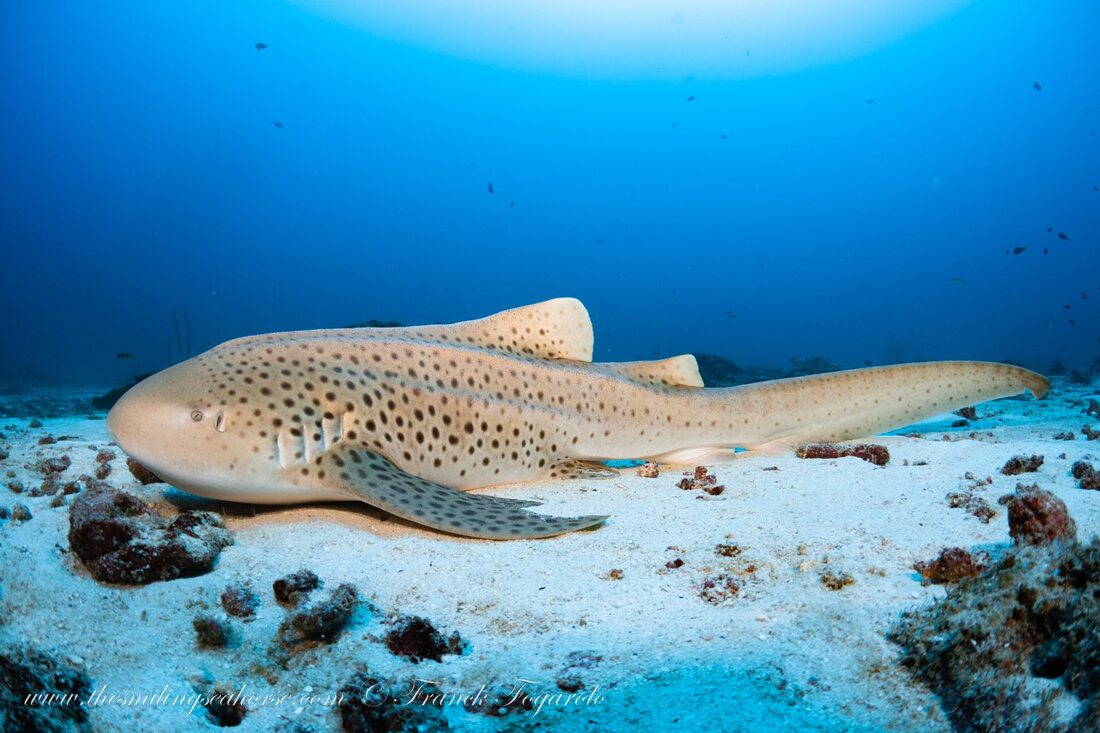
The Zebra Shark, Stegostoma tigrinum, is a truly remarkable creature. It’s named, quite obviously, for the striking stripe pattern adorning its youth. These aren’t just for show, though. Scientists believe these bold black and white stripes offer excellent camouflage in the shallow, reef-filled waters where young Zebra Sharks spend their early lives, breaking up their outline amongst the seagrass and coral.
But here’s where it gets interesting. As a Zebra Shark matures, those distinct stripes begin to fade, replaced by a pattern of dark spots. This transformation isn’t just cosmetic; it seems to correlate with changes in habitat and behavior as they move to deeper waters and adopt a more benthic lifestyle. The shift in coloration likely aids in camouflage as they transition to a different environment.
Captain Spaulding, a resident at LegaSea, has leucism. This condition reduces his pigmentation, leaving him almost entirely white with faint markings. He shows how much individual variation exists within the species.
Findings from the 2026 study
In 2026, Dr. Aris Thorne and his team at the Marine Research Institute of Queensland published new details on zebra shark breeding. They found that these sharks use communal breeding sites and follow a specific mate selection process.
Prior to 2026, it was generally assumed that Zebra Sharks engaged in relatively solitary breeding behavior. This study, however, revealed that multiple males will congregate around a receptive female, engaging in a display of coordinated movements and coloration changes. These displays aren’t aggressive, but rather seem to be a way for the female to assess the health and genetic fitness of potential mates. It's a kind of underwater 'dance-off' to determine the strongest genes.
Perhaps the most revolutionary aspect of the research involves the discovery of pheromonal signaling. The study demonstrated that female Zebra Sharks release specific pheromones to attract multiple males to the breeding ground. This isn't a simple broadcast signal; the pheromone composition changes, seemingly indicating the female's preference among the displaying males. It's a level of reproductive complexity rarely seen in sharks.
Delayed Maturity & Variable Reproduction
The 2026 study found that zebra sharks take a long time to reach sexual maturity. Females usually don't breed until they are 13 to 17 years old. Because they grow so slowly, overfishing and habitat loss hit their populations harder than faster-growing species.
Adding to the complexity, the study also revealed substantial variability in reproductive rates among females. Some females consistently produce larger clutches of eggs – up to 400 eggs at a time – while others produce significantly smaller clutches, even within the same geographic location. Researchers suspect this variation is linked to both genetic factors and environmental conditions, such as food availability and water temperature.
The delayed maturity and variable reproduction rates mean that Zebra Shark populations are slow to recover from disturbances. Conservation efforts need to account for this, focusing on protecting mature individuals and ensuring the availability of suitable breeding habitats. Understanding the factors influencing clutch size is also a priority for future research.
Genetics and stripe development
The 2026 study took a deep dive into the genetic basis of the Zebra Shark’s distinctive stripe pattern. Researchers identified a cluster of genes, tentatively named the "Tigrinus" locus, that appear to play a crucial role in pigment cell development and distribution. Variations within this locus correlate strongly with the intensity and persistence of the stripes.
Interestingly, the study found that individuals with greater genetic diversity within the Tigrinus locus tend to exhibit more pronounced stripe patterns and, surprisingly, also demonstrate higher reproductive success. This suggests that the genes controlling coloration may be linked to other important traits, such as immune function or disease resistance.
While the precise mechanisms are still being investigated, the research indicates that the Tigrinus locus regulates the production and migration of melanocytes—the cells responsible for producing melanin, the pigment that gives Zebra Sharks their color. Further research is needed to fully understand the interplay between genes, environment, and the development of these iconic stripes.
- The Tigrinus locus is the gene cluster that regulates how pigment cells develop.
- Melanocytes: Cells responsible for melanin production.
- Genetic Diversity: Correlated with stripe intensity and reproductive success.
Comparison of Genetic Factors Influencing Coloration in Select Shark Species
| Species | Coloration Trait | Identified Genes | Research Status |
|---|---|---|---|
| Great White Shark | Dorsal Grey/Ventral White Countershading | Melanocortin 1 Receptor (MC1R) – associated with melanin production | Confirmed |
| Tiger Shark | Dark Stripes & Spots (Juvenile) | Agouti Signaling Protein (ASIP) – influences pigment distribution | Confirmed |
| Whale Shark | Distinctive Spot Pattern | Limited research; potential involvement of genes regulating melanocyte development | Suspected |
| Leopard Shark | Dark Spots | Genes involved in melanophore differentiation and migration | Suspected |
| Zebra Shark | Polka Dot Pattern (Juvenile) transitioning to Stripes (Adult) | Preliminary findings suggest novel gene expression related to pigment cell regulation; specific genes under investigation (2026 study) | Suspected |
| Horn Shark | Saddle Markings | Genes influencing melanocyte stem cell behavior | Suspected |
| Wobbegong Shark | Complex Camouflage Patterns | Research suggests genes impacting dermal pigmentation | Unknown |
| Hammerhead Shark | Grey to Brown Dorsal Surface | MC1R variations influencing melanin levels | Confirmed |
Illustrative comparison based on the article research brief. Verify current pricing, limits, and product details in the official docs before relying on it.
Habitat & Breeding Grounds
Zebra Sharks are found throughout the Indo-Pacific region, from the eastern coast of Africa to northern Australia and the islands of Southeast Asia. They prefer shallow, coastal waters, particularly coral reefs, seagrass beds, and sandy bottoms. These habitats provide ample foraging opportunities and shelter from predators.
The 2026 study pinpointed several previously unknown communal breeding grounds, primarily located in the waters surrounding the Philippines and Indonesia. These areas are characterized by specific water conditions—warm temperatures, high salinity, and relatively calm currents—and are often associated with submerged coral formations. These sites appear to be crucial for the species' reproductive success.
Unfortunately, many of these key breeding grounds are facing increasing threats from habitat degradation, including destructive fishing practices, pollution, and coastal development. Protecting these areas is paramount for the long-term survival of Zebra Sharks. The study emphasized the need for establishing marine protected areas and implementing sustainable fishing regulations.
New conservation needs
The IUCN Red List currently classifies the Zebra Shark as "Near Threatened’, but the findings of the 2026 study suggest that this assessment may need to be revisited. The species" slow maturation rate, variable reproduction, and habitat loss make it particularly vulnerable to population declines.
The study's insights into breeding behavior have direct implications for conservation strategies. Protecting identified breeding grounds is now more critical than ever. This requires collaboration between local communities, governments, and conservation organizations to enforce regulations and promote sustainable practices. Reducing bycatch in fisheries that overlap with Zebra Shark habitat is also essential.
Further research is needed to monitor population trends, assess the impact of climate change on breeding success, and investigate the genetic diversity of different populations. A proactive and adaptive approach to conservation, informed by the latest scientific evidence, is crucial for ensuring the future of this remarkable species.
- Setting up marine protected areas around breeding grounds.
- Implement sustainable fishing regulations to reduce bycatch.
- Monitor population trends and assess the impact of climate change.
- Investigate genetic diversity to inform conservation efforts.


No comments yet. Be the first to share your thoughts!